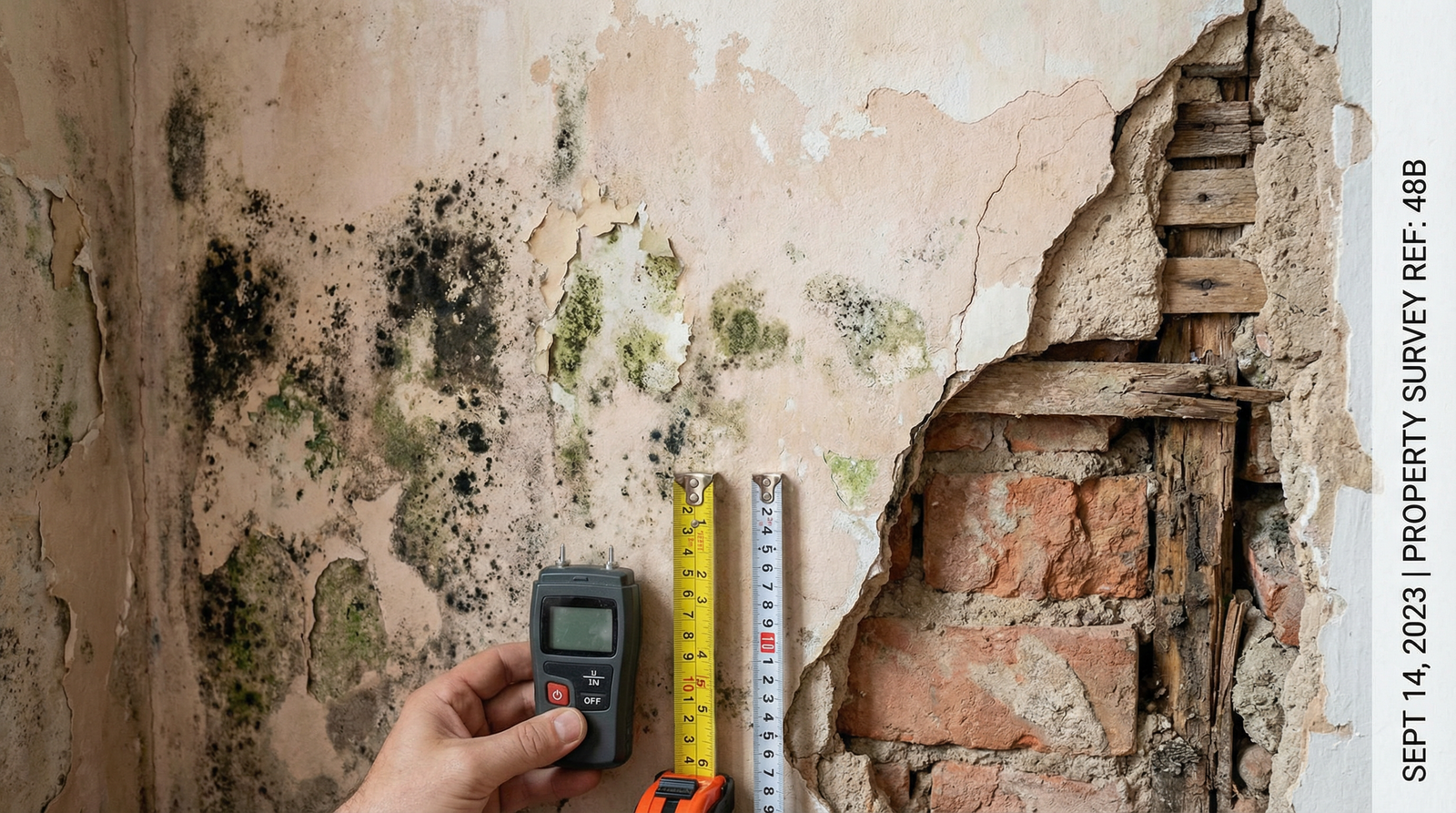
Damp is the single most common problem our Maidstone surveyors identify during building surveys across Kent. Whether it's a Victorian terrace in the town centre or a modern flat in West Kent, moisture issues affect properties of all ages and types throughout the region.
As experienced RICS surveyors, we've inspected thousands of properties across Maidstone and know exactly what to look for. In this comprehensive guide, our chartered building surveyors explain the three main types of damp, how we identify them during surveys, and what each means for your property and budget.
Why Damp is So Common in Kent Properties
Before we dive into specific damp types, it's worth understanding why moisture problems are so prevalent in residential properties across Maidstone and Kent:
Climate Factors: The South East experiences high rainfall and humidity. Kent's position means properties face prevailing wet weather from the Atlantic, especially during autumn and winter months. This constant moisture exposure tests building defences.
Building Age: Many properties across Maidstone date from Victorian and Edwardian eras. These older homes were built without damp-proof courses or modern moisture barriers. Solid brick walls, common in period properties, lack the cavity that protects modern homes from penetrating moisture.
Construction Methods: Traditional building techniques using lime mortar and plaster are breathable but can't prevent moisture movement like modern materials. When these breathable materials are sealed with cement or impermeable paint, moisture gets trapped, causing problems.
Property Maintenance: Years of deferred maintenance means many Kent properties have failing gutters, damaged roof tiles, or cracked render. Each maintenance issue creates entry points for water, leading to damp problems our team of surveyors regularly identifies.
The Three Main Types of Damp
During building surveys, our RICS surveyors in Maidstone classify damp into three distinct categories. Understanding the difference is crucial because each type needs different treatment approaches.
1. Rising Damp: Ground Moisture Moving Upward
Rising damp occurs when ground moisture travels upward through walls via capillary action. It's particularly common in older residential properties built before 1875 when damp-proof courses weren't standard practice.
How We Identify Rising Damp:
Our chartered building surveyors look for specific tell-tale signs during inspections across Kent:
- Tide marks on walls: A horizontal line of staining, typically reaching 1-1.5 meters above floor level
- Damaged skirting boards: Rot or decay at the base of internal walls
- Salt deposits: White crystalline deposits (efflorescence) on wall surfaces
- Peeling paint and wallpaper: Moisture pushes decorations away from walls
- Musty odour: Distinctive damp smell in affected rooms
- Moisture meter readings: Elevated readings in lower wall sections
What Causes Rising Damp in Maidstone Properties:
During Level 3 building surveys of period properties, we commonly find:
- Absent damp-proof course: Pre-1875 properties simply don't have one
- Failed damp-proof course: Original slate or lead courses deteriorate over time
- Breached damp-proof course: External ground levels raised above the damp course
- Bridged damp-proof course: Render, soil, or debris bridging over the barrier
Treatment Approaches:
Our independent chartered surveyors recommend several treatment options depending on severity:
- Chemical damp-proof course: Injecting silicone-based fluids into walls
- Physical damp-proof course: Installing new impermeable membrane
- Lowering ground levels: Exposing existing damp course above ground
- Improving ventilation: Allowing walls to breathe and dry naturally
True rising damp is actually less common than many people think. Our surveying services often reveal that diagnosed "rising damp" is actually penetrating moisture or condensation. This is why professional assessment from RICS surveyors matters – incorrect diagnosis leads to inappropriate and expensive treatments.
2. Penetrating Damp: Water Entering from Outside
Penetrating damp is moisture entering through external walls, roofs, or windows. It's the most common damp type our local surveyors find during surveys and valuations across Maidstone.
How Penetrating Damp Differs from Rising Damp:
Unlike rising damp's horizontal tide mark, penetrating moisture appears as patches corresponding to external defects. Our building surveyors identify it through:
- Damp patches: Irregular staining on walls, ceilings, or around windows
- Worsens in wet weather: Problems appear or intensify during rainfall
- Can occur anywhere: Not limited to ground floor or lower walls
- External correlation: Internal damp patches align with external defects
Common Causes We Find in Kent Properties:
During homebuyer reports and building surveys, these issues appear repeatedly:
Roof Problems:
- Missing or slipped roof tiles allowing rain penetration
- Failed lead flashing around chimneys and valleys
- Blocked or damaged gutters overflowing onto walls
- Cracked or missing ridge tiles
Wall Issues:
- Cracked or damaged external render
- Failed pointing between bricks (very common in period properties)
- Solid walls without cavities (typical in Victorian properties across Maidstone)
- Damaged or porous bricks absorbing rainwater
Window and Door Problems:
- Failed seals around window and door frames
- Damaged wooden window frames allowing water ingress
- Poorly installed replacement windows
- Missing or damaged cills directing water into walls
Other Penetrating Damp Sources:
- Leaking or overflowing gutters and downpipes
- Defective external plumbing
- Porous chimneys drawing rain down into the property
- Failed cavity wall insulation trapping moisture
Treatment Solutions:
The good news? Penetrating damp often resolves once the source is fixed. Our reports and building surveys identify the specific defects requiring attention:
- Roof repairs: Replace missing tiles, repair flashings, clear gutters
- Repointing: Remove failed mortar and repoint brickwork
- Render repairs: Patch cracks and damaged areas
- Window repairs: Seal gaps, replace rotten frames
- Gutter maintenance: Clear blockages, repair or replace damaged sections
3. Condensation: The Most Common Problem
Ironically, the most frequently reported "damp" isn't damp at all – it's condensation. Our team of surveyors finds condensation issues in both old and new properties across Kent.
How Condensation Differs:
Condensation occurs when warm, moist air contacts cold surfaces and turns back into water. Unlike rising or penetrating damp where moisture comes from outside, condensation generates inside the property.
Identifying Condensation:
During Level 2 homebuyer surveys and Level 3 inspections, our RICS surveyors identify condensation through:
- Black mould growth: Especially in corners, on external walls, around windows
- Streaming windows: Water droplets running down glass, especially mornings
- Musty smell: Particularly in bathrooms, kitchens, bedrooms
- Damp patches: On cold spots like external wall corners
- Pattern evidence: Behind furniture against external walls
Why Condensation Affects Modern and Period Properties:
Condensation problems have increased in recent decades across Maidstone property types:
In Modern Properties:
- Energy efficiency measures seal buildings tightly
- Double glazing reduces ventilation compared to drafty old windows
- Reduced air changes trap moisture inside
In Period Properties:
- Modern double glazing installed without adequate ventilation
- Blocked chimneys and air bricks reducing natural airflow
- Modern impermeable paints preventing walls from breathing
- Cement renders replacing breathable lime renders
Lifestyle Factors:
Modern living generates significant moisture that our surveying practice considers during assessments:
- Cooking produces water vapor
- Showering and bathing release moisture
- Drying clothes indoors adds humidity
- Even breathing produces moisture – a family of four generates 10-15 liters daily!
Solutions for Condensation:
Unlike structural damp, condensation solutions focus on lifestyle and ventilation:
- Improve ventilation: Open windows regularly, especially after cooking/bathing
- Extract moisture: Install or improve extractor fans in kitchens/bathrooms
- Maintain heating: Consistent low heating better than intermittent high heating
- Reduce moisture production: Dry clothes outside, use pan lids when cooking
- Dehumidifiers: Remove excess moisture from air in problem areas
How Our RICS Surveyors Test for Damp
Accurate damp diagnosis requires more than visual inspection. Our chartered building surveyor team uses professional equipment during surveys provide across Maidstone:
Moisture Meters:
Electronic meters measure moisture content in building materials. We use two types:
- Pin-type meters: Probes inserted into walls measure electrical resistance
- Radio frequency meters: Non-invasive scanning of wall surfaces
However, meters aren't foolproof. Salts in walls from old damp can give false positive readings even after moisture has gone. This is why our local knowledge and experience matter – we interpret readings in context.
Visual Inspection:
Our surveyors Maidstone clients trust examine:
- Staining patterns indicating moisture source
- External defects that might cause penetrating damp
- Ventilation provision and potential condensation causes
- Salt deposits suggesting historic or ongoing rising damp
Thermal Imaging:
For complex cases, thermal cameras reveal:
- Cold spots where moisture present
- Moisture paths through walls
- Missing insulation contributing to condensation
Damp in Different Property Types Across Maidstone
Our surveying services reveal that damp problems vary by property age and construction:
Victorian/Edwardian Properties:
- Rising damp from absent or failed damp-proof courses
- Penetrating damp through solid walls
- Condensation when modern double glazing installed without ventilation
1930s-1950s Properties:
- Cavity wall damp if wall ties corroded
- Penetrating damp where cavity bridged by mortar
- Rising damp if original damp course failed
Modern Properties (Post-1980):
- Condensation most common issue
- Penetrating damp around poorly installed windows
- Cavity wall insulation causing moisture retention
The Cost of Damp Problems
During valuations in Maidstone, damp issues significantly affect property value. Our RICS valuations consider:
Treatment Costs:
- Rising damp treatment: £1,000-£3,000+ depending on extent
- Penetrating damp repairs: £500-£5,000+ depending on cause
- Condensation solutions: £200-£2,000 for ventilation improvements
Secondary Damage:
- Rot in skirting boards and floor joists
- Damaged plaster requiring replacement
- Mould removal and redecoration
- Damaged flooring or carpets
Value Impact:
Serious damp problems can reduce property value by 10-20%. Our independent chartered surveyors provide realistic cost assessments, helping buyers negotiate appropriately or budget for repairs.
Preventing Damp Problems
Whether you're buying or already own property in Kent, prevention is better than cure:
Regular Maintenance:
- Clear gutters and drains annually
- Check roof condition, especially after storms
- Inspect external walls for cracks or damaged pointing
- Ensure air bricks and vents remain unblocked
Proper Ventilation:
- Open windows regularly for air circulation
- Use extractor fans when cooking or bathing
- Don't block air bricks or ventilation grilles
- Consider mechanical ventilation with heat recovery in sealed properties
Appropriate Heating:
- Maintain consistent low heating rather than intermittent high heating
- Heat all rooms to some degree
- Avoid leaving properties unheated for extended periods
Why Professional Survey is Essential
Damp diagnosis isn't straightforward. Our RICS home surveys and full building surveys provide accurate assessment because:
- We understand building construction: Different properties behave differently
- We use professional equipment correctly: Interpreting readings requires experience
- We identify root causes: Not just symptoms
- We provide appropriate solutions: Avoiding unnecessary expensive treatments
Many damp-proofing companies have vested interests in finding problems requiring expensive treatments. As independent RICS regulated surveyors, we provide unbiased assessment of the actual condition of the property.
Conclusion
Damp problems affect properties throughout Maidstone and Kent, but accurate diagnosis and appropriate treatment usually resolves issues successfully. Whether you're concerned about rising damp, penetrating moisture, or condensation, professional assessment from qualified chartered building surveyors protects your investment.
Our surveying practice has examined thousands of damp problems across Kent. We understand regional characteristics, construction methods, and effective solutions. If you're buying property in Maidstone or concerned about damp in your current home, contact our team of surveyors for expert insight you can trust.
Concerned About Damp in Your Property?
Contact our RICS chartered surveyors for professional damp assessment and honest advice on treatment options across Maidstone and Kent.
Get Expert Damp Assessment