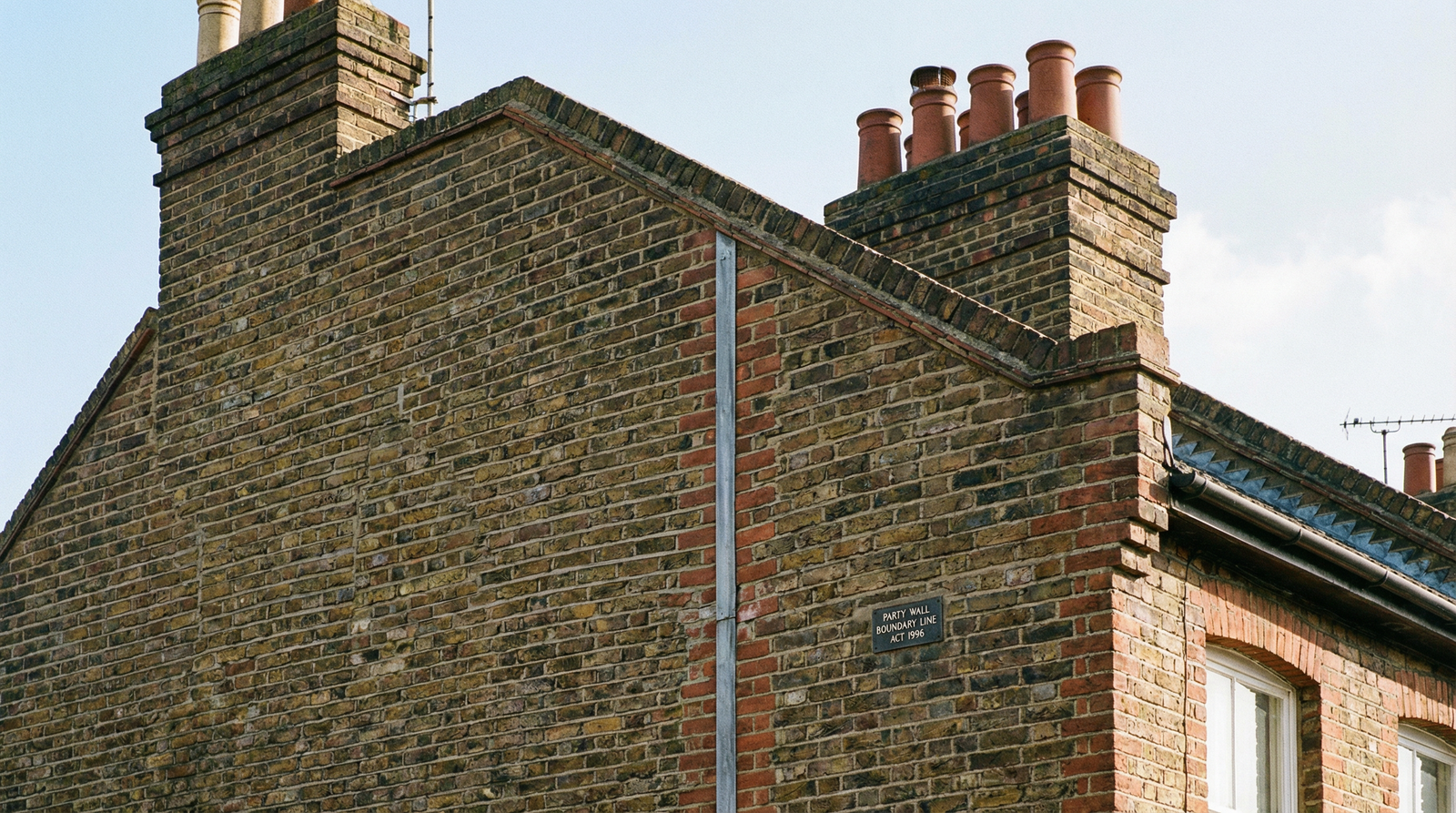
Planning an extension, loft conversion, or basement excavation in Maidstone? If your building work affects shared walls or boundaries with neighbors, you'll need to understand the Party Wall Act 1996. As experienced party wall surveyors serving Kent, we guide property owners through this process daily.
In this comprehensive guide, our chartered building surveyors explain what party walls are, when you need agreements, the surveyor's role, and how the process protects both building owners and their neighbors across Maidstone and the wider South East.
What is a Party Wall?
A party wall is any wall or structure shared between two properties. Common in residential properties across Kent:
Party Wall: A wall standing on the boundary between two properties, shared by both owners. Most common in terraced and semi-detached houses throughout Maidstone.
Party Fence Wall: A wall standing on the boundary but used to separate buildings (like a garden wall between properties).
Party Structure: Can include floors and other structures separating buildings or parts of buildings with different owners (common in flats).
What is the Party Wall Act 1996?
The Party Wall Act provides a legal framework for preventing and resolving disputes when building work affects shared walls or boundaries. It applies to England and Wales, including all properties in Maidstone, Kent, and the South East.
The Act balances rights:
- Building Owner's Right: To carry out necessary building work on their property
- Adjoining Owner's Right: To have their property and interests protected
Our surveying practice helps both parties understand their rights and obligations under the Act.
When Do You Need a Party Wall Agreement?
Our team of surveyors advises that you need to follow Party Wall Act procedures if your building work involves:
Work Directly on Party Walls
- Building a new wall on or at the boundary line
- Cutting into a party wall (inserting damp-proof course, etc.)
- Making good, repairing, or demolishing a party wall
- Removing chimney breasts from party walls
- Inserting a damp proof course in a party wall
Adjacent Excavation Work
Excavations within 3 meters (and below foundation level) or within 6 meters (and below 45-degree line from foundation) of neighboring structures require party wall procedures. Common scenarios in Maidstone property developments:
- Basement conversions
- Deep foundation work for extensions
- Underpinning adjacent to boundaries
Work on Boundary Structures
- Raising party wall height
- Demolishing and rebuilding party walls
- Inserting beams or supports through party walls
Common Extensions Requiring Party Wall Notice:
In our experience as local surveyors across Maidstone, these building projects typically need party wall procedures:
- Side extensions on semi-detached or terraced houses
- Loft conversions affecting party walls
- Rear extensions near boundaries requiring deep foundations
- Removal of chimney breasts passing through party walls
The Party Wall Process Explained
Our independent chartered surveyors guide clients through this step-by-step process:
Step 1: Determine if Party Wall Act Applies
Before starting work, establish whether your project falls under the Act. Our property consultants review building plans and advise whether party wall procedures are necessary.
Step 2: Serve Party Wall Notices
The Building Owner (person doing the work) must serve formal written notices on Adjoining Owners (neighbors affected). Different notice types exist:
- Party Structure Notice: For work directly on party walls (2 months notice required)
- Line of Junction Notice: For new walls on boundary lines (1 month notice)
- Notice of Adjacent Excavation: For excavations near boundaries (1 month notice)
Notices must include specific information about planned work. Our surveying services include preparing and serving notices correctly.
Step 3: Neighbor's Response
Adjoining Owners have 14 days to respond. They can:
Consent: Agree to the work in writing. If they consent, work can proceed without further party wall procedures (though we recommend written consent is detailed and specific).
Dissent or Not Respond: If they refuse consent or don't respond within 14 days, the "dispute" procedure begins. Note: "dispute" doesn't necessarily mean disagreement – it's simply the formal process under the Act.
Step 4: Appoint Party Wall Surveyors
Once a dispute arises (by dissent or no response), surveyors must be appointed:
Option 1: Agreed Surveyor
Both parties jointly appoint a single surveyor. This is often more economical. As RICS surveyors in Maidstone, we regularly act as agreed surveyors, representing both parties impartially.
Option 2: Two Surveyors
Each party appoints their own surveyor. The two surveyors work together to prepare the Party Wall Award. This option costs more (each party pays their own surveyor) but provides dedicated representation.
Our Role as Party Wall Surveyors:
As experienced chartered building surveyors, we can act as:
- Building Owner's Surveyor: Representing the person doing the work
- Adjoining Owner's Surveyor: Protecting the neighbor's interests
- Agreed Surveyor: Acting impartially for both parties
Step 5: Prepare Schedule of Condition
Before work starts, surveyors inspect the Adjoining Owner's property and prepare a detailed schedule documenting existing condition. This includes:
- Photographs of all rooms, especially near party walls
- Notes on existing cracks, defects, décor condition
- External condition where relevant
This schedule provides baseline evidence if later disputes arise about damage caused by building work.
Step 6: Create Party Wall Award
The surveyor(s) prepare a Party Wall Award – a legal document setting out:
- Details of proposed work
- Rights and responsibilities of both parties
- Working hours and access arrangements
- How the work will be carried out
- Who pays costs (usually Building Owner pays all reasonable costs)
The Award is served on both parties and becomes legally binding. Our surveying practice ensures Awards are clear, comprehensive, and legally robust.
Step 7: Work Proceeds
With the Award in place, building work can proceed. The Building Owner must:
- Follow the Award's requirements
- Give required notices before starting specific work
- Allow surveyor access for inspections if needed
- Make good any damage caused
Step 8: Post-Work Inspection
After work completes, surveyors inspect the Adjoining Owner's property again, comparing condition to the original schedule. Any damage caused by the work must be made good by the Building Owner.
Costs and Who Pays
A common question about party wall procedures:
Building Owner's Costs:
- Their own surveyor's fees (if appointing separate surveyor)
- Adjoining Owner's surveyor's reasonable fees
- Agreed Surveyor's fees (if using single surveyor)
- Cost of making good any damage
Typical Surveyor Fees:
- Straightforward cases: £500-£1,500 per party
- Complex cases: £1,500-£3,000+ per party
- Agreed Surveyor: Often £800-£2,000 total
While party wall procedures add cost to building projects, they provide essential protection and often prevent expensive disputes. Our property services are competitively priced while ensuring thorough professional service.
Common Party Wall Scenarios in Maidstone
Based on our local knowledge of residential properties across Maidstone, these scenarios frequently require our party wall services:
1. Loft Conversions in Terraced Houses
Raising party walls to create headroom, inserting steelwork through party walls, or structural alterations all require party wall procedures. Very common in Victorian and Edwardian terraces throughout Maidstone.
2. Side Extensions on Semi-Detached Properties
Building within 3 meters of the neighbor's structure often requires notice due to foundation depth. Our surveyors ensure proper procedures followed.
3. Basement Conversions
Excavating below neighboring foundations always requires party wall procedures. These complex projects need experienced surveyor input.
4. Removing Chimney Breasts
When chimney breasts pass through party walls (common in terraced properties), removal requires party wall notice even if only removing your side.
What Happens if You Don't Follow Party Wall Act?
Some property owners in Kent ignore party wall requirements, hoping to avoid costs and delays. This is risky:
Neighbors Can Seek Injunction: Courts can stop your building work until proper procedures followed. This delays projects and increases costs significantly.
You're Liable for Damage: Without proper procedures and records, proving damage wasn't caused by your work becomes difficult. You might face costly claims.
Building Control Issues: While Building Control doesn't enforce Party Wall Act, they may ask about procedures, and problems can delay sign-off.
Future Sale Problems: Solicitors ask about party wall compliance. Non-compliance creates difficulties selling your property.
As independent RICS surveyors, we strongly advise following proper procedures. The modest cost and time investment prevents expensive problems later.
Top Tips for Smooth Party Wall Process
Our experience as party wall surveyors across Maidstone suggests:
1. Start Early: Begin party wall procedures before finalizing building contracts. Allow 2-3 months for the process.
2. Communicate with Neighbors: Inform neighbors about your plans before serving formal notices. Good neighbor relations prevent problems.
3. Use Experienced Surveyors: Party wall work requires specialist knowledge. Choose RICS surveyors experienced in this field.
4. Don't Skip Procedures: Even if neighbors are friendly, follow proper processes. Relationships can change, and written agreements protect everyone.
5. Keep Records: Document everything – notices served, responses received, conversations held. Good records prevent disputes.
Choosing Your Party Wall Surveyor
Not all surveyors have party wall expertise. Look for:
- RICS membership: Qualified chartered surveyors understand legal requirements
- Party wall experience: Ask about specific party wall qualifications and experience
- Local knowledge: Local surveyors understand regional property types and common issues
- Clear communication: Good surveyors explain complex legal processes clearly
- Fair fees: Reasonable charges with clear fee structures
Our team of surveyors has extensive party wall experience across Kent and the South East. We're regulated by RICS and provide clear, professional service to Building Owners and Adjoining Owners alike.
Conclusion
Party wall procedures might seem bureaucratic, but they serve an important purpose: protecting both property owners' interests when building work affects shared structures. Whether you're planning an extension in Maidstone, converting a loft, or undertaking any work near boundaries, understanding your party wall obligations is essential.
Our chartered building surveyors guide clients through party wall processes daily, ensuring legal compliance while maintaining good neighbor relations. Don't risk expensive disputes or project delays by ignoring party wall requirements.
Contact Maidstone Surveyors today for expert insight on party wall matters. Our surveying services provide professional, cost-effective support for Building Owners and Adjoining Owners across Maidstone, Kent, and the wider region.
Need Party Wall Advice?
Get expert guidance from our experienced RICS party wall surveyors serving Maidstone and Kent.
Contact Our Party Wall Team