Your roof is your property's first line of defence against the elements. Yet it's one of the most overlooked aspects when buying a home in Maidstone or Kent. As RICS surveyors who inspect hundreds of roofs annually, we know that roof condition significantly affects property value and your future costs.
In this comprehensive guide, our chartered building surveyors explain exactly what we examine during roof inspections, the common problems we find across Kent, and why professional roof assessment is crucial for any property purchase.
Why Roof Inspections Matter
Roof replacement is one of the most expensive property maintenance tasks homeowners face. Depending on size and materials, a new roof on a Maidstone property can cost £5,000-£15,000 or more. That's why our building surveys always include thorough roof assessment.
Problems Start Small: A few missing tiles might seem minor, but they let water penetrate, causing rot in roof timbers, damage to ceilings, and expensive structural repairs. Catching issues early through professional surveys saves money and prevents deterioration.
Hidden from Ground Level: Many roof defects aren't visible from the ground. Our team of surveyors use ladders, binoculars, and experience to identify problems other people miss.
Affects Property Value: During valuations in Maidstone, roof condition significantly impacts property worth. A roof nearing end of life might reduce value by £10,000-£20,000, reflecting the replacement cost buyers will face.
Roof Inspection Methods
The extent of roof inspection depends on survey type and safe access:
Level 2 Homebuyer Surveys
For Level 2 homebuyer reports, our local surveyors inspect roofs from:
- Ground level: Using binoculars to examine visible surfaces
- Upper floor windows: Closer inspection where safe access available
- Adjacent properties: Sometimes roof visible from neighboring buildings
This non-invasive approach identifies obvious problems but has limitations. If we can't see the full roof or suspect hidden issues, our report recommends further investigation.
Level 3 Building Surveys
Level 3 building surveys provide much more thorough roof inspection. Our chartered building surveyor team:
- Uses ladders: Where safe, we access roofs for close examination
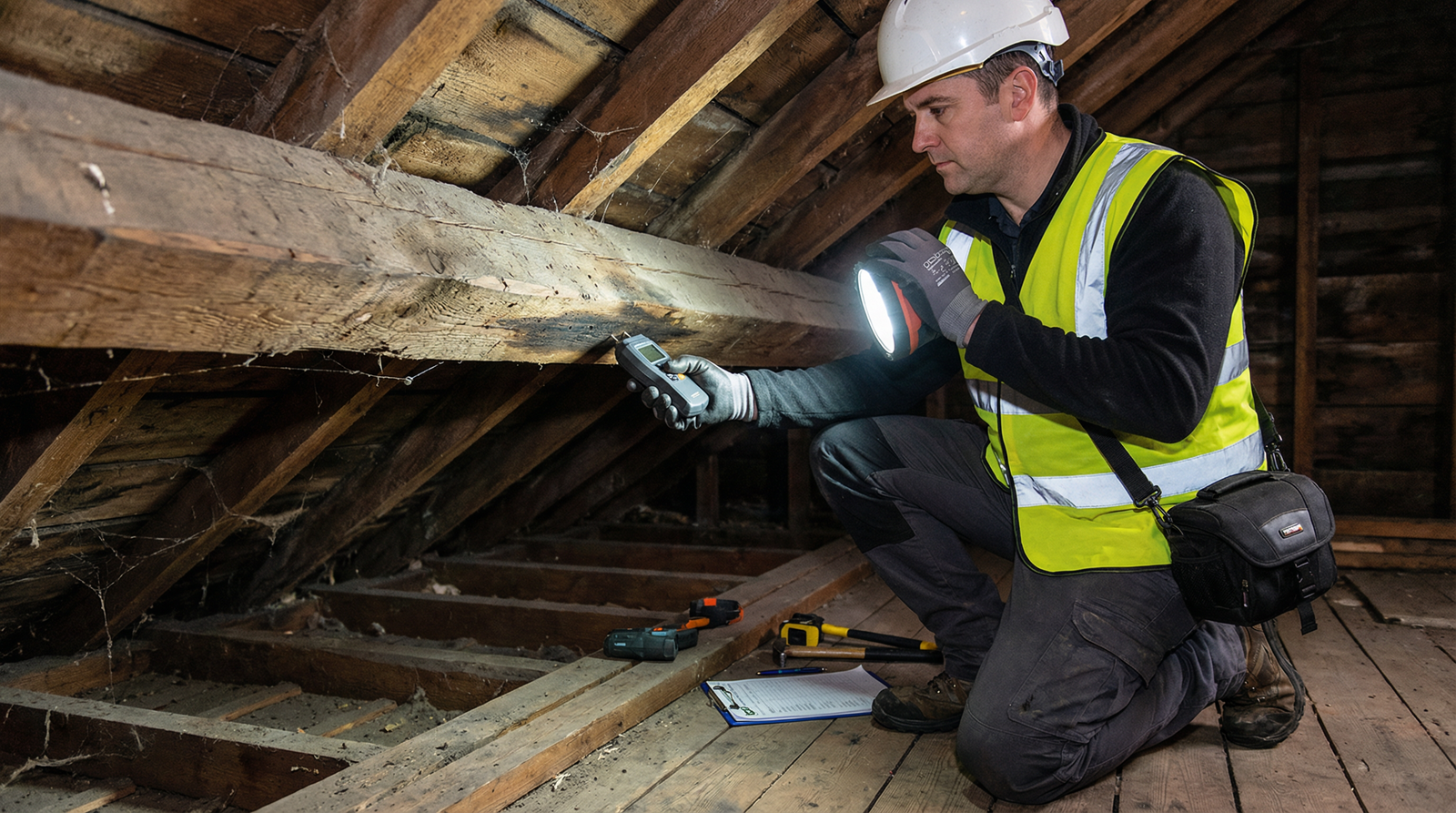
- Inspects roof space: Internal examination of structure and condition
- Tests materials: Physical inspection of tiles, slates, timbers
- Documents everything: Detailed photography and notes
This comprehensive approach suitable for older properties, period homes, or anywhere detailed assessment matters for your property and budget.
What We Examine: External Roof Elements
When our surveyors Maidstone clients trust inspect roofs, we systematically examine all components:
1. Roof Covering
Tiles and Slates:
Different roof coverings common across Maidstone:
- Natural slate: Can last 80-100+ years but eventually delaminates
- Clay tiles: Long-lasting but can slip, crack, or become porous
- Concrete tiles: Typical post-1950s, lasts 40-60 years
- Artificial slate: Modern material, lifespan varies by quality
We check for:
- Missing, slipped, or broken tiles/slates
- Porous or delaminating materials
- Incorrect installation or repairs
- Age and remaining lifespan
- Moss and algae growth indicating moisture retention
2. Ridge and Hip Tiles
The apex of your roof uses special tiles that overlap the main covering. Our building surveyors frequently find:
- Loose or missing ridge tiles (very common in Victorian properties)
- Failed mortar bedding causing tiles to wobble
- Cracked tiles allowing water ingress
- Poor previous repairs using inappropriate materials
Ridge tile issues are among the most common problems in our reports and building surveys across Kent.
3. Flashings
Flashings seal junctions between roof covering and other elements. Made from lead, zinc, or modern alternatives:
- Chimney flashings: Around chimney base, often failing in older properties
- Valley flashings: Where roof planes meet, prone to cracking
- Abutment flashings: Where roof meets walls
- Soil pipe flashings: Around vent pipes penetrating the roof
Failed flashings cause penetrating damp. Our RICS surveyors in Maidstone check that flashings are properly installed, adequately lapped, and still watertight.
4. Rainwater Goods
Gutters, downpipes, and rainwater disposal are crucial yet often neglected:
- Gutters: Check for leaks, sags, blockages, corrosion
- Downpipes: Look for cracks, leaks, blocked sections
- Gutter brackets: Ensure adequately supported and secure
- Connections: Joints between sections must be sound
Overflowing gutters pour water down walls, causing penetrating damp, staining, and potential structural issues – common findings in our surveys and valuations.
5. Chimneys and Stacks
Many residential properties in Maidstone have chimney stacks, especially period homes:
- Structural condition: Leaning, cracked, or unstable stacks
- Pointing: Failed mortar allowing water penetration
- Pots: Missing, cracked, or leaning chimney pots
- Flashings: As discussed above, often problematic
- Capping: Whether disused chimneys properly capped
Neglected chimneys are expensive to repair and can become dangerous. Our independent chartered surveyors frequently recommend chimney attention in period property surveys.
What We Examine: Internal Roof Structure
Wherever safe and accessible, our surveying services include roof space inspection:
Roof Timbers
The structural framework supporting your roof covering:
- Rafters: Sloping timbers carrying roof weight
- Purlins: Horizontal timbers supporting rafters
- Ridge board: Timber at roof apex where rafters meet
- Ceiling joists: Supporting ceiling below
We check for:
- Rot: Wet or dry rot in timber members (common where roofs leak)
- Infestation: Woodworm or other insect damage
- Structural adequacy: Whether timbers adequate for loads
- Sagging: Deflection indicating timber failure or overloading
- Alterations: Inappropriate removal of structural members
Timber problems require urgent attention. Our chartered building surveyors identify severity and recommend appropriate specialist investigations when needed.
Insulation
Modern standards require significant roof insulation:
- Presence: Is there any insulation?
- Type and thickness: Meeting current standards?
- Condition: Undisturbed and effective?
- Ventilation: Adequate airflow above insulation?
Inadequate insulation means higher heating bills. While not a defect, our reports note where upgrading insulation would improve energy efficiency.
Ventilation
Proper roof space ventilation prevents condensation:
- Eaves ventilation grilles or gaps
- Ridge ventilation tiles
- Gable end vents
- Absence of blockages to air circulation
Poor ventilation causes condensation, leading to timber rot and insulation damage. Our local knowledge of Kent properties means we understand regional ventilation requirements.
Signs of Water Ingress
Inside the roof space, we look for evidence of leaks:
- Water staining on timbers or insulation
- Daylight visible through roof covering
- Damp or rotting timbers
- Moisture on sarking felt or roof boarding
Active leaks require immediate attention. Even historic water ingress indicates vulnerability requiring monitoring or repair.
Common Roof Problems in Kent Properties
Based on thousands of building surveys across Maidstone, these roof issues appear most frequently:
1. Failing Victorian Slate Roofs
Original slate roofs on Victorian properties often reach end of life after 100+ years. Slates delaminate (split into layers), becoming porous and fragile. While individual slate replacement is possible initially, eventually full re-roofing becomes necessary – a major expense.
2. Leaking Valley Gutters
Pre-1960s properties often have lead or zinc-lined valley gutters between roof sections. These corrode, split, or develop pinholes over decades, causing leaks into the property. Replacement requires significant work and expense.
3. Concrete Tile Deterioration
Post-war properties typically have concrete tiles. After 40-50 years, these become porous, absorb moisture, and eventually need replacing. Our RICS valuations factor in remaining roof life.
4. Failed Ridge Tiles
Probably the single most common roof issue across Maidstone. Original mortar bedding deteriorates, tiles become loose, and wind or rain damage follows. Easily spotted during surveys and relatively straightforward to repair.
5. Neglected Chimneys
With many homes no longer using fireplaces, chimneys are often ignored. Pointing fails, pots crack, flashings deteriorate, and stacks can become unstable. Our surveys provide specific advice on chimney maintenance needs.
6. Inadequate Maintenance
Simple neglect causes many roof problems. Blocked gutters overflow onto walls, moss growth retains moisture, minor damage spreads. Regular maintenance prevents expensive repairs.
Roof Condition and Property Value
During valuations in Maidstone, roof condition significantly affects our assessment:
Good Condition: Recent replacement or well-maintained older roof adds value and buyer confidence.
Fair Condition: Serviceable but aging roof with some years remaining. Buyers factor in future replacement costs.
Poor Condition: Failing roof requiring immediate attention. Reduces value substantially, often by £10,000-£20,000+ reflecting replacement cost and urgency.
Our independent RICS valuations consider roof condition realistically. We won't overvalue properties with failing roofs, protecting mortgage lenders and buyers.
When to Commission Specialist Roof Survey
Sometimes our standard building survey recommends additional specialist investigation:
- Flat roofs: Specialist inspection with moisture detection equipment
- Unusual construction: Thatched roofs, green roofs, complex geometries
- Suspected serious defects: When we identify concerning issues but can't fully access
- Very old roofs: Period properties where roof history uncertain
Specialist surveys provide detailed analysis beyond our general inspection scope. While adding cost, they're essential for informed decisions on complex properties.
Roof Maintenance Advice
Our surveying practice recommends regular roof maintenance for residential properties across Kent:
Annual Checks
- Clear gutters and downpipes, especially autumn
- Check for slipped, missing, or broken tiles from ground
- Inspect flashings around chimneys for obvious problems
- Look for vegetation growth or moss accumulation
After Storms
- Check for wind damage or displaced tiles
- Look for fallen debris from trees
- Inspect chimneys for movement or damage
Professional Inspection
- Commission detailed roof survey every 10-15 years
- Before purchasing property (part of building survey)
- If you notice leaks, damp, or visible damage
Conclusion
Your roof is fundamental to your property's protection and value. Professional inspection by qualified RICS surveyors identifies current condition, remaining lifespan, and necessary maintenance or repairs. Whether you're buying a property in Maidstone or own a home across Kent, understanding roof condition is essential for protecting your investment.
Our team of surveyors examines hundreds of roofs annually across all property types and ages. We know what to look for, how to interpret findings, and provide clear advice on necessary action. Don't overlook this crucial element when commissioning your building survey or homebuyer report.
Contact Maidstone Surveyors today for professional roof assessment as part of our comprehensive surveying services across Kent and the South East.
Concerned About Your Roof Condition?
Get expert roof assessment from our RICS chartered surveyors as part of a comprehensive building survey.
Book Your Survey Today